
Seal coating is a maintenance treatment for asphalt parking lots. A sealcoat layer helps shield the surface from sun, water and everyday wear, and it gives a faded gray lot a uniform dark finish again.
Not every lot is a good candidate. Asphalt that is badly cracked or breaking apart needs repair first, and sealcoat doesn't fix structural problems underneath. We look at the surface before recommending it, and we plan restriping as part of the same project since sealcoat covers the existing lines.
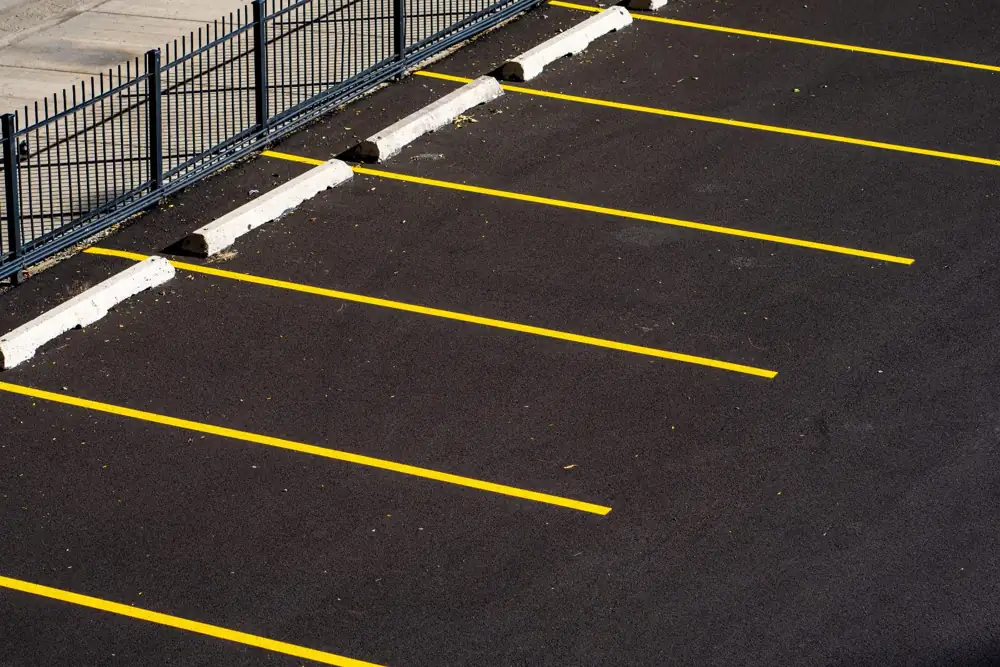
What's included
- Review of the asphalt surface and drainage
- Cleaning and surface preparation
- Crack filling and patching coordinated before sealing
- Sealcoat application to suitable asphalt
- Restriping after the sealcoat has cured
Signs a lot may be ready for sealcoat
- The asphalt has turned light gray and looks dry or chalky.
- Small surface cracks are starting to show.
- Loose stones are appearing on the surface.
- It has been several years since the lot was last sealed.
How a sealcoat project runs
Assess the pavement
We check cracks, soft spots, drainage and oil stains to see whether the lot is suitable for sealcoat and what repairs come first.
Repair and clean
Cracks and damaged areas are addressed, then the surface is cleaned so the sealer bonds.
Apply sealcoat
Sealer is applied in sections, with traffic routed around the areas being worked on.
Cure
The surface is kept closed until it has cured. Curing time depends on the product, temperature and humidity.
Restripe
Once cured, the lot is restriped, using the existing layout or an updated one.
What affects the cost
Every property is different, so pricing is based on a site-specific estimate. The main factors are:
- Total square footage of asphalt
- Crack filling and patching needed beforehand
- Cleaning, including oil stain treatment
- Number of coats and product used
- Restriping scope after sealing
- Phasing to keep part of the lot open
Seal coating in Houston's climate
Sealcoat needs warm temperatures and dry weather to cure properly. Houston has plenty of warmth, but sudden storms are common, so projects are scheduled around the forecast and may move if rain is expected.
Intense summer sun is hard on asphalt. Regular sealing is one way property owners help slow down that surface wear between larger repairs.
Seal Coating questions
How long does sealcoat need to cure?
It depends on the product, temperature, humidity and sun. Many lots are kept closed to traffic for at least a day, but we'll confirm the timing for your project before work starts.
Will sealcoat fix cracks and potholes?
No. Sealcoat protects the surface; it doesn't repair damage. Cracks and potholes should be repaired first.
Do I need to restripe after seal coating?
Yes. Sealcoat covers the existing lines, so restriping is part of a sealcoat project.
Seal Coating near you
We provide seal coating in Houston and these nearby communities:
- Houston
- Conroe
- Tomball
- Humble
- Kingwood
- Sugar Land
- Spring
- Klein
- League City
- Clear Lake
- Cypress
- Katy
- Pearland
- Aldine
- Rosenberg
- Cinco Ranch